
THREATS TO CADDO LAKE
SAVING OUR WATER
Caddo Lake Institute and partners have appreciated our 20-year partnership with Northeast Texas Municipal Water District to manage water resources in the Cypress Basin for the benefit of people and ecosystems. While the region is facing new challenges and opportunities, we hope to continue this partnership for many years to come. This document provides a synopsis of the background of the flows work and its benefits and lays out the context for and conclusions of our modeling analysis (click pictures or links below) examining the potential for both ongoing flows implementation and potential lease of water from the Cypress Basin. Click HERE for the: Intro to our Current Situation
______________________
Click HERE for the: Water Availability Analysis Summary (technical document)

POLLUTION
Caddo Lake and several of its tributaries face ongoing water quality challenges. Monitoring has shown elevated levels of bacteria, increased pH, measurable mercury concentrations, and reduced dissolved oxygen, all of which can impact aquatic life and recreational activities. Investigations of the watershed have identified multiple contributors to these conditions, including livestock, wildlife, pets, on-site sewage systems, poultry operations, and municipal wastewater treatment facilities. Together, these sources contribute to nutrient enrichment, microbial contamination, and chemical changes in the water, highlighting the importance of coordinated conservation and management efforts to protect the lake’s health.
GIANT SALVINIA
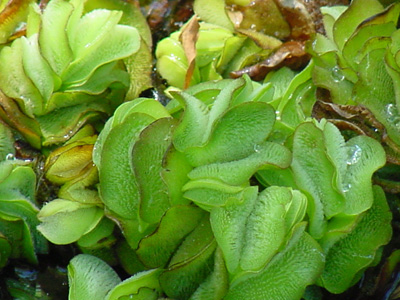
Giant Salvinia is currently one of the most invasive aquatic plants in East Texas. It ravages ecosystems by outgrowing and replacing native plants that provide food and habitat for native animals. Giant Salvinia blocks out sunlight and decreases oxygen concentrations killing fish and other aquatic species. When the plant masses die, their decomposition lowers dissolved oxygen still further. Giant Salvinia can expand very rapidly, doubling in size within only about a weeks time.
Below is a close-up example of Giant Salvinia and how it can be unknowingly transported on your boat or trailer. Click either for more information.
CHINESE TALLOW
Chinese tallow trees can invade wildland areas and swiftly replace natural communities with nearly monospecific stands. It alters natural soil conditions, creating an inhospitable environment for many native species. Below is an example of Chinese Tallow and a map of its current distribution. Click HERE or either of the photos below for more information.


LATEST NEWS
CLI Rebuttal False NETMWD Public Statements w/ Key Attachments
As part of our commitment to transparency and public education, the Caddo Lake Institute has prepared a factual summary addressing recent statements made to area city councils regarding environmental flows and our water stewardship proposal. Our goal is simply to...